
The Nature of the System: A Hierarchy of Levels
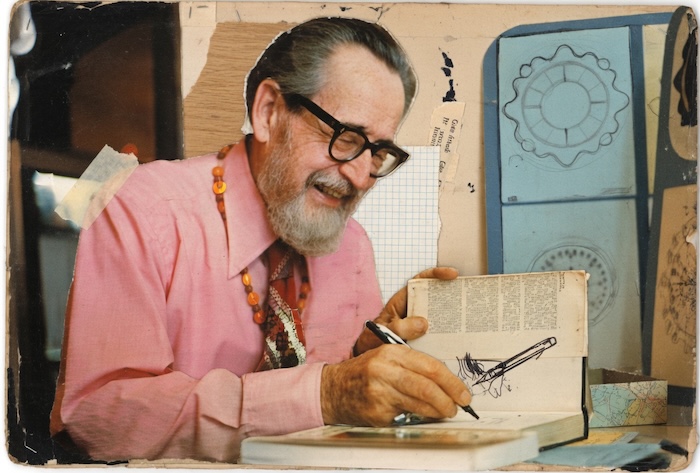
Dane Rudhyar (1895-1985), a philosopher, composer, and humanistic astrologer, revolutionized the modern understanding of astrology by conceptualizing it not as a predictive system, but as a mandala of transformation for individual and collective consciousness. In his vision, astrological components are organized in a precise hierarchy that reflects the process of manifestation from the universal to the concrete.
The Three Fundamental Levels
1. The Zodiac Signs: The Universal Archetypal Foundation
Function: The twelve signs constitute the most fundamental level of the astrological system. They represent universal energies and archetypal principles that structure all human experience. Rudhyar understood them as “qualitative potentialities” that form the basic patterns of consciousness.
Characteristics:
- They are pure principles; they don’t “influence” directly but establish fields of possibility
- Represent the twelve phases of any complete cycle of development
- Constitute a universal symbolic language that precedes their concrete manifestation
- Form the basic “wheel” or mandala upon which all experience is projected
Metaphor: If astrology were a language, the signs would be the fundamental alphabet with which all the “words” and “sentences” of experience are constructed.
2. The Planets: The Focalizing and Dynamizing Forces
Function: The planets (including the Sun and Moon as “luminaries”) act as activating agents that take the archetypal energies of the signs and focus them into specific dynamic forces. They are the “actors” in the cosmic drama.
Characteristics:
- Specify and concretize the universal energies of the signs
- Represent distinct psychological and experiential functions
- Operate as intermediaries between the universal (signs) and the individual (houses)
- Their movement through the signs “activates” different aspects of zodiacal potential
Metaphor: If signs are the colors on an artist’s palette, planets are the tools (brushes, spatulas) that apply those colors in specific ways.
3. The Houses: The Fields of Concrete Experience
Function: The twelve houses represent the realms of experience where planetary energies manifest according to zodiacal principles. They are the “stage setting” where personal and collective drama unfolds.
Characteristics:
- Contextualize universal energies in the concrete life of the individual
- Represent specific spheres of human activity and experience
- Vary according to time and place (they differ in each natal chart)
- Connect the cosmic with the personal, the transpersonal with the biographical
Metaphor: If astrology were theater, the houses would be the different stages where various scenes of the life drama unfold.
The Flow of Manifestation: A Three-Stage Process
Rudhyar emphasized that this system operates in a specific direction:
Universal Energies → Focalizing Forces → Concrete Experience
     (Signs)              (Planets)          (Houses)
This flow represents the process of crystallization from the potential to the actual, from the universal to the particular. It is not a system of causal influences, but a pattern of symbolic correspondence where each level informs and gives meaning to the next.
The Natal Chart as a Mandala of Transformation
For Rudhyar, the natal chart is not a predetermined destiny, but a mandala (sacred circle) that represents:
- A map of potentialities: Shows the archetypal tools available to the individual
- A process of individuation: Indicates the path toward psychological wholeness
- A microcosm of the macrocosm: Reflects universal processes in the individual
- A tool of synchronicity: Reveals meaningful patterns rather than mechanical causes
Implications of This Vision
Humanistic Astrology: Rudhyar shifted the emphasis from fatalistic prediction toward conscious development and personal responsibility.
Astrology as Symbolic Psychology: The natal chart becomes a language for understanding psychological processes and growth patterns.
Holistic Approach: The totality of the chart (the gestalt) is more important than the sum of its isolated parts.
Collective Transformation: Individual growth contributes to the evolution of collective consciousness, as each human being embodies aspects of the universal mandala.
The Rudhyarian vision invites us to see astrology not as a system of external influences, but as a symbolic language that describes patterns of meaning in human experience. The zodiac wheel thus becomes a living mandala, a map for the conscious navigation of the journey from universal potentiality to individual realization, simultaneously contributing to humanity’s collective transformation.

Explore by topic
More on the blog
The House Systems in Astrology: on symbolic meanings
What house systems are in astrology, why a planet can change houses, and how to interpret Placidus, Koch, Campanus and Equal Houses.
Astrology for Lazy Brave People: An archetypal treatise for absurd times
More than just a book about signs: an archetypal astrology treatise designed to dissect, without euphemisms, the architecture of our contradictions.
Planetary Transits and Hermeticism: An Operative Guide to Traditional Astrology
Discover the meaning of planetary transits through traditional Hermetic astrology.
From the Library of Alexandria to Your Table: Interpreting Your Annual Cycle
Master the fundamentals of Annual Profection—the method through which Hellenistic astrologers, and now you, deciphered the map of each year.